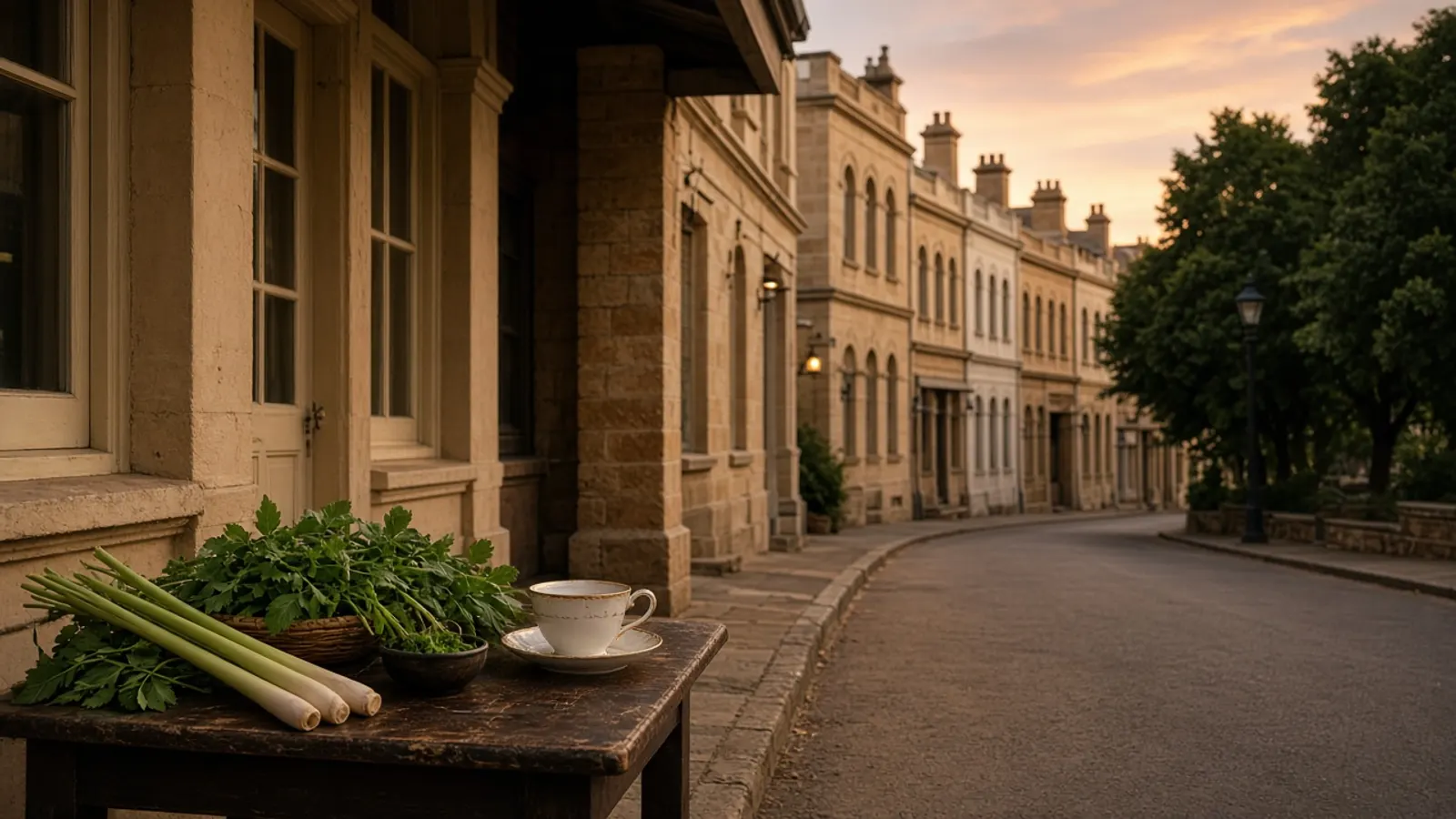
A civic-centre room can be excellent. Judge the dressing and the wok, not the sandstone outside. This Bendigo notebook is how: questions you can ask of any plate on Pall Mall or the arts-precinct edge.
A short regional menu is usually the opposite of a warning. A short menu that names pastes and salads clearly is often a more confident kitchen than a laminated encyclopaedia.
Dressing: lime and fish sauce
The first spoon of a salad or larb should be sour and salty, then hot, then a little sweet. That order matters. Sugar leading means the kitchen is cooking toward a fear of the diner. Vinegar leading, with no fish sauce, means a substitution that has lost the dish. Lime leading, with fish sauce, means someone tasted the bowl.
Vegetarian dressings need a planned salt: soy or a vegetarian “fish” sauce, not simply the omission of flavour. Ask. The food guide explains why this is not automatic.
Cucumber relish, nam jim, jaew — the small bowls on a Bendigo family table — are tasting instruments. They should be sharp. If they are dull, the kitchen’s seasoning is dull.
Wok: smell the sear
Pad krapow, a chilli-and-garlic stir-fry, morning glory if they have it: these should smell of high heat. A wok that is not hot produces steamed mince and sad basil. You will smell the difference from the table if the room is honest. If you only smell sweet sauce, look at the menu length again.
Regional gas and induction setups vary. We do not need to inspect the kitchen. The plate reports.
Mixed: two heats, one table
Bendigo groups often mix gallery visitors, grandparents and children. Two heats, one table is the method: a gentle yellow or massaman, a hot salad, chilli on the side, a full steamer of rice. Service that offers this split unprompted is literate. Service that cannot hear the split is a problem the Bendigo hub already asked you to walk away from.
Do not test a mixed table with a single “medium green curry”. Medium is how flavours go to die in committee.
Close: herbs still stand up
As in Ballarat, herbs at the end of service tell you about holding. Mint that still tastes of mint is a pass. Basil that tastes of the fridge is a fail.
Cook the home version when you want control: the Bendigo recipes give you a yellow curry and a relish designed for precisely this mixed table. Then go out and see whether the civic-centre wok can sear. Sandstone will not help it.
Gallery timing as a tasting constraint
If you must be in a foyer at a named time, say so. A kitchen that sends the wok first and the coconut curry when it is ready is cooking. A kitchen that holds everything so it can land together is catering. Catering can still taste fine. It will not teach you about sear. Order fewer dishes. Share. Skip the fried bundle if the clock is short.
Lunch in the centre is rice plus one curry plus, if they have it, a salad. Do not test Bendigo with a Melbourne banquet shape at noon. Do test the dressing: lime and fish sauce before sugar. If lunch is only a sweet coconut, dinner may be too; patterns hold. Short menus help you see the pattern. Encyclopaedias hide it.
Mixed-heat tasting is the Bendigo speciality even when you are not a family. Gallery visitors plus locals plus a chilli-shy driver is a normal table. Two heats, chilli on the side, a full steamer of rice. If service offers that split unprompted, you are in a literate room. If service looks confused, order the yellow or massaman as the gentle column yourself and a salad as the hot column. Do not outsource the split to a single “medium”.
Herbs at close: mint that still tastes of mint. Coriander that still smells green. Basil that has not gone to the fridge. This is the same close test as Ballarat, in a different grid. Walk Pall Mall with it. Leave the sandstone to the civic photographers.
Rice, relish and what a short menu reveals
Jasmine rice in Bendigo should still steam. A cooker started too early for a sitting that arrived after a gallery is a hospitality problem you may mention politely. Sticky rice belongs if larb or a nam prik-style relish is on the table; default jasmine is fine when the menu is coconut curries and a basil mince. Confused fried rice with everything is a template. Templates hide paste.
A small bowl of cucumber relish or nam jim is a tasting instrument, not a garnish. It should be sharp with vinegar or lime, not dull with sugar. If the kitchen puts one down unasked for a family table, they already understand the mixed-heat method. If they do not, you can still order the salad as your hot column and the yellow curry as your gentle one. The Bendigo recipes do that split at home; you are allowed to do it in the civic centre.
Short menus reveal whether the kitchen names pastes. “Green, red, yellow” is literacy. “Chicken curry or beef curry” is a protein list. You can eat well from a protein list. You cannot learn much from it. Ask one sentence about the paste. The answer is the review.
Compare with Geelong without turning western Victoria into one town. The bay is not Pall Mall. The paste still has to wake in oil. That sentence is the whole regional method, and it does not require a score.