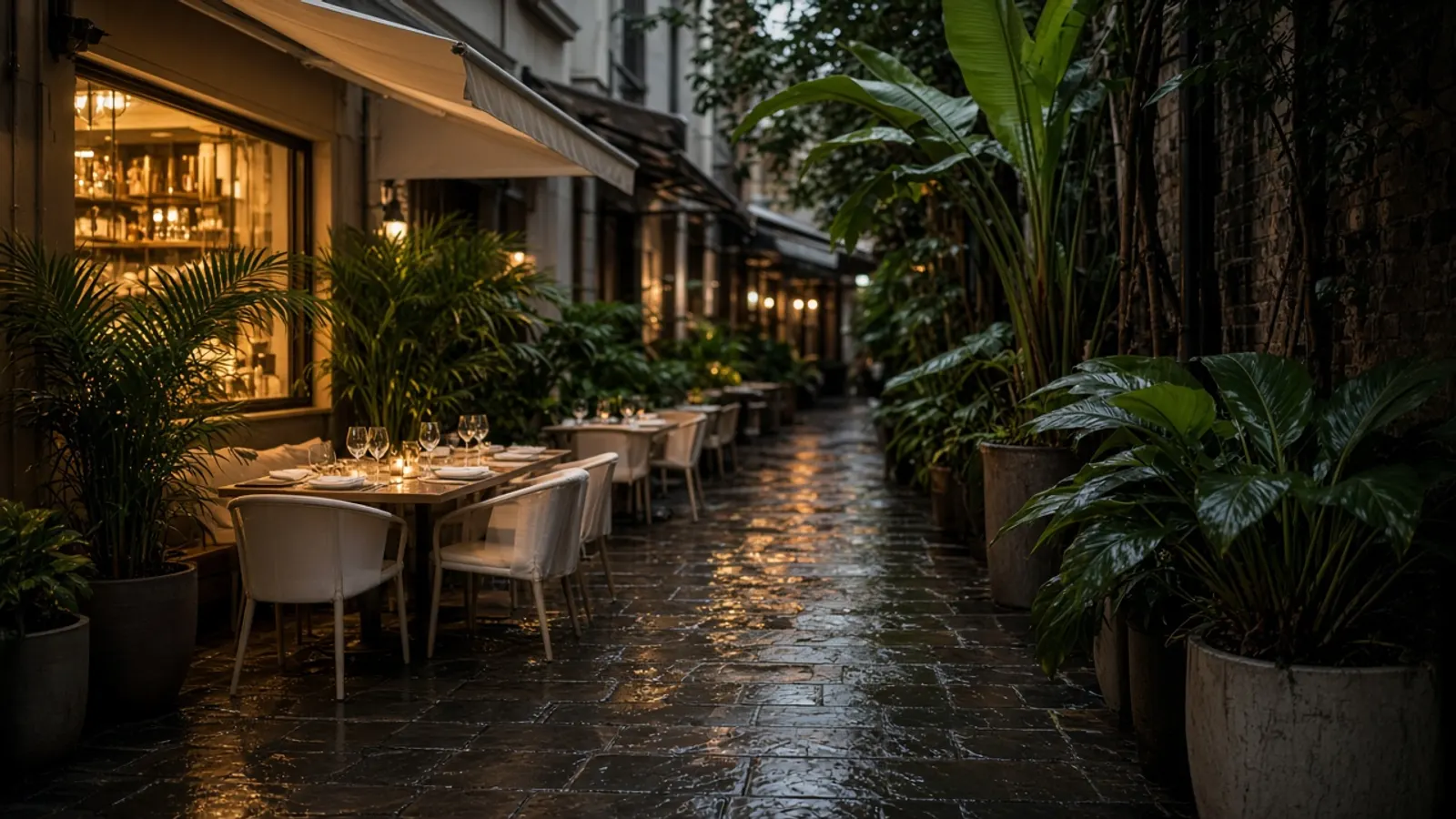
Melbourne’s Thai cooking is not a single strip with a house style. It is a set of neighbourhoods that shop differently, keep different hours in practice, and feed different jobs: a quick lunch, a family Sunday, a late finish after the Grid, a long shared table. This hub is a choosing method. It does not name operators as currently open, and it does not rank anyone.
Decide the job of the meal before you decide the suburb. Rice, a curry and a stir-fry on a short clock is a different hunt from som tam, a sour soup, grilled meat and two woks for six people. Once you know the job, pick a walking catchment that already cooks for it, then judge the room with your senses — aroma, herb condition, how staff talk about chilli and allergens — rather than with a photograph of a floating market.
Neighbourhoods that change the pantry
Richmond, especially the long eating street that runs toward the river, is a place people go when they want South-East Asian groceries and a density of rooms in walking distance. Thai kitchens sit in a mixed street, not a theme park. Look for menus that still bother with a salad and a soup, not only a sweet stir-fry and a fried bundle. The grocers matter as much as the awnings: if you can buy bunches of holy basil, sawtooth coriander and makrut lime leaves on the same walk, you are in a pantry neighbourhood, and pantry neighbourhoods usually cook with a shorter distance between the market and the wok.
Footscray and the inner west reward people who treat the market as the centre of gravity. This is a shopping city as much as a dining city. A good choosing habit is to walk the produce first — galangal, green papaya, Thai eggplants, bunches of basil — then read menus for the same ingredients rather than for English dish nicknames. West-side rooms often feed locals through the week. That can mean a calmer table and a kitchen that will tell you, in plain language, whether the green curry is already hot.
Springvale and the south-eastern belt are where many Melbourne households already do their Thai and Vietnamese grocery shop. If you are choosing a meal after a Springvale shop, you are standing in one of the city’s strongest herb catchments. Use that. A kitchen that cannot produce a sour salad when the greengrocer next door is stacked with lime and papaya is telling you about convenience, not about craft. South-east rooms can be family-heavy on weekends; write the headcount and the mild-versus-hot split before you arrive.
The inner north — including Carlton and the streets that feed the university — is a walk-up, share-plate geography. Lygon Street is a neighbour, not the whole story. One street over you will find rooms that live on student evenings and museum-precinct lunches. Choose by herb smell and by whether a salad is dressed to order.
The Hoddle Grid is speed, meeting-points and late bowls. Docklands is a planned precinct with wind, event pulses and hotel guests who need shelter more than a secret. Neither is “worse Thai”. They are different jobs. Use those hubs when the night is a Grid night or a waterfront night; use this page when you can travel a few tram stops for a slower table.
Bayside and the south-east suburbs beyond Springvale follow the same method at lower density: read the shopping, then the menu. A single confident room on a local high street can outcook a crowded tourist corner if the paste still fries and the rice still steams.
How to choose a Melbourne Thai kitchen
Walk in asking whether the room smells of cooking. Fried curry paste, lime leaf in oil, garlic hitting a hot wok, a sour soup coming to the boil — those are living smells. A room that smells only of sweet chilli and a deep-fryer is not automatically a no, but it is a warning to order the dishes that must be finished to order: a salad, a basil stir-fry, a clear soup.
Read the menu for structure, not for length. You want evidence of a sour line (som tam, yum, tom yum), a paste line (green, red, a dry curry, massaman or yellow), a wok line (basil, holy basil, morning glory, noodles), and rice that is treated as a dish rather than a prop. If every curry is the same price band and the same coconut colour in the photographs, you are looking at a convenience menu. We will not invent prices; you can still notice when everything has been flattened into one idea of “Thai”.
Ask about heat in a sentence: “mild for two of us, medium for two, and please do not make the mild version sweet”. Melbourne rooms that cook for mixed tables are used to this. If the answer is a shrug, order the dishes that are structurally gentle — massaman, many coconut soups, satay — and put chilli on the side. The food guide explains how to ask without emptying the dish.
Dietary notes belong in the same sentence as the booking or the walk-up greeting. Fish sauce and shrimp paste are not optional decorations; they are the salt of many dressings and pastes. Gluten hides in some soy sauces and thickeners. Vegetarian is possible and common in Melbourne, but it is a conversation, not a symbol on a menu.
Groups, banquets and the shared table
Melbourne is a sharing city. Default to a sour thing, a fried or grilled thing, a curry, a wok dish and more jasmine rice than you think you need. For a proper group, read how to plan a Melbourne Thai banquet and write the dietary list before anyone phones a room. We will help you shape the sequence; we will not invent a venue, a deposit or a set-menu cost.
Weeknight two-tops can skip the banquet logic and still eat well: one salad or soup, one curry, one stir-fry, rice. That shape travels from Richmond to Footscray without needing a specials board.
Tasting and cooking
Take the Melbourne tasting method with you: broth, herbs, heat, rice, service. If you would rather stay in, the Melbourne recipes hub starts from inner-city grocer habits, and the main recipes page has pad Thai, green curry, tom yum and basil chicken in full.
This page will still be true if a particular awning comes down. Neighbourhoods remain. Herbs remain. The job of the meal remains. Choose those, not a ranking we refuse to print.