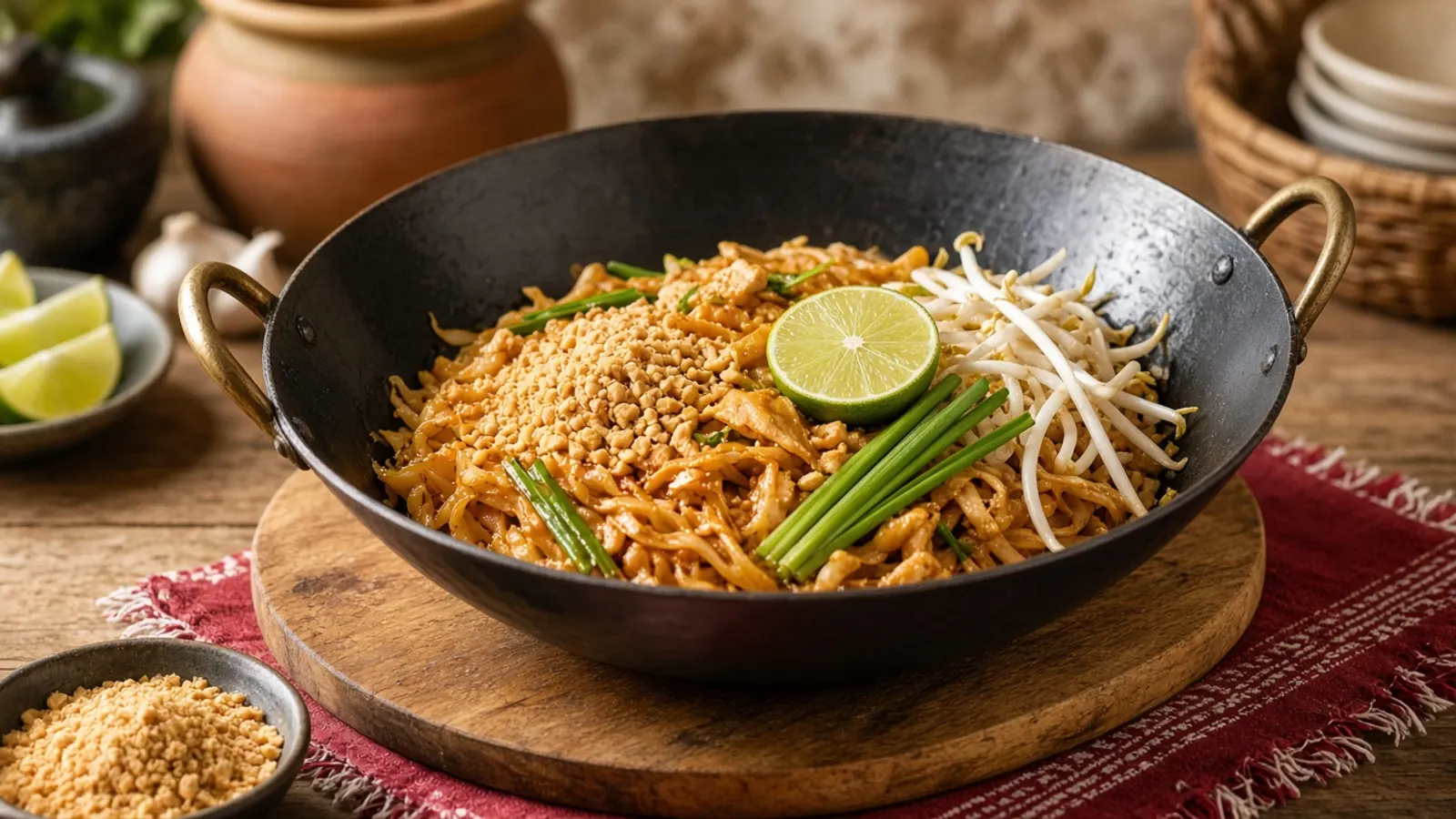
How do you make pad Thai at home? You soak medium flat rice noodles until they are pliable but not soft, mix a seasoning of tamarind, fish sauce and palm sugar, and stir-fry fast over high heat with garlic, protein, egg, garlic chives, bean sprouts and crushed peanuts. Work in batches so the noodles char rather than stew. That is the whole method in one paragraph. The rest of this page is the detail, plus three other original recipes — green curry, tom yum goong and pad krapow — written for an Australian supermarket-plus-Asian-grocer shop.
Nothing here is a restaurant recreation. City hubs add shopping geography: Melbourne, CBD, Carlton, Docklands, Geelong, Ballarat, Bendigo, Gold Coast. Each of those pages carries a different complete recipe. This page carries the four dishes Australian diners ask for by name.
Read the dish explainer if you want to know what belongs in each bowl before you cook. Read the food guide if you need mild, gluten-free or vegetarian substitutions. Start rice first except for pad Thai, which is a noodle dish that still likes a cucumber on the side.
Pad Thai — tamarind noodles, egg, chives, peanut
Serves two as a main. Pad Thai is not a brown sweet stir-fry. Tamarind should lead. Fish sauce keeps it adult. Palm sugar rounds. Chilli is optional at the table. The noodles should be a little chewy, with seared edges, not a soft clump.
Ingredients
- 180g dried medium flat rice noodles (sen lek)
- 2 tablespoons tamarind paste, loosened with 2 tablespoons warm water (or 3 tablespoons prepared tamarind water)
- 2 tablespoons fish sauce
- 1½ tablespoons palm sugar, mashed
- 1 tablespoon lime juice, plus wedges to serve
- 2 tablespoons oil
- 2 garlic cloves, sliced
- 150g firm tofu, cut into small batons, or 150g peeled prawns, or a mix
- 2 eggs, lightly beaten
- 1 handful garlic chives, cut into lengths (spring onion if you cannot find chives)
- 1 handful bean sprouts, plus extra raw to serve
- 2 tablespoons roasted unsalted peanuts, crushed
- Optional: a pinch of chilli flakes, a tablespoon of chopped pickled radish if you find it
Method
Soak the noodles in recently boiled water until they are flexible but still a touch firm in the centre. Drain well. Mix tamarind, fish sauce, palm sugar and lime juice in a cup until the sugar dissolves. Taste the sauce: sour-salty-sweet in that order of attention. Adjust now.
Heat a wok or your widest frypan until it is very hot. Add oil, then garlic, then tofu or prawns. Sear. Push aside, pour in the egg, scramble it just set. Add noodles and the sauce. Toss hard. The noodles should drink the sauce and pick up a little colour. If they clump, the pan is too cool or too crowded — stop, split the batch, start again. Add chives and most of the sprouts for the last thirty seconds. They should stay crisp. Plate, top with peanuts, chilli flakes, extra sprouts and lime. Eat at once.
Notes
The usual home failure is soaking the noodles until they are ready to eat, then stir-frying them into mush. Undercook the soak. The second failure is a sweet sauce without tamarind. Do not substitute tomato sauce. The third failure is cooking for four in one pan. Cook two batches.
Vegetarian: skip fish sauce for a vegetarian “fish” sauce or a mix of soy and lime, and skip shrimp if your tofu-only version is the point. Gluten-free: rice noodles already are; check the tamarind and any soy you added. Chicken is not classic in the street stall sense but will work if sliced thin and seared first.
Leftover pad Thai is a lesser dish. Cook what you will eat.
Green curry — paste fried, coconut, Thai basil, a vegetable that still snaps
Serves four with rice. Green curry (gaeng khiao wan) is a fresh-chilli paste curry, often hotter than red, finished with Thai basil and sometimes makrut lime leaf. It should be savoury and herbal, not a sweet green soup. Frying the paste in oil or in the thick top of a coconut tin is the step that makes it a curry.
Ingredients
- 2 tablespoons oil, or 4 tablespoons coconut cream from the top of a tin
- 3–4 tablespoons green curry paste (bought is fine)
- 500g chicken thigh, sliced, or firm white fish added later, or extra vegetables
- 400ml coconut milk
- 150ml water or stock
- 1 tablespoon fish sauce
- 1 teaspoon palm sugar
- 4 makrut lime leaves, torn
- 100g Thai eggplants, quartered, or green beans cut in lengths, or zucchini as a last resort
- 1 handful Thai basil
- 1–2 fresh green chillies, sliced, optional
- Jasmine rice, to serve
Method
Heat oil or coconut cream over medium-high heat. Fry the paste, stirring, until it is very fragrant and the oil separates, 3–5 minutes. If it sticks, splash in a little coconut milk. Add chicken and turn it in the paste until it loses its raw colour. Pour in remaining coconut milk and water, add fish sauce, palm sugar and lime leaves. Simmer until the chicken is almost done. Add the vegetables and cook until they are tender but not collapsed. Taste: salt from fish sauce, a little sweetness, heat from the paste, aroma from leaf. Take off the heat and fold in Thai basil so it wilts in the residual heat rather than boiling to black.
Serve with rice. Lime wedges on the table are a Melbourne habit and a good one.
Notes
Fish goes in after the vegetables, for a few minutes only. Prawns the same. Vegetarian: tofu or pumpkin, paste checked for shrimp paste and fish, vegetable stock. Too thick: a splash of water. Too thin: simmer uncovered, do not add a flour slurry. Split coconut: you likely boiled it too hard; keep future simmers gentle after the initial fry.
If the paste is mild and you wanted heat, add fresh chilli, not extra sugar. If you wanted mild, start with two tablespoons of paste and skip extra chilli — see the food guide.
Tom yum goong — hot and sour prawn soup
Serves two as a main with rice, or four as a starter. Tom yum should be sour, hot and aromatic with lemongrass, galangal and lime leaf. The prawn version is tom yum goong. A creamy variant (nam khon) adds a spoon of coconut milk or evaporated milk at the end; the clear version does not. Choose on purpose.
This is a different soup from Ballarat’s tom kha (galangal-coconut-chicken) and from Docklands’ saucepan tom yum (apartment mushrooms). The method below is the full prawn classic for a home wok night.
Ingredients
- 800ml water or light chicken stock
- 2 lemongrass stalks, bruised and cut
- 6 slices galangal
- 6 makrut lime leaves, torn
- 3–6 bird’s eye chillies, bruised
- 8–12 medium prawns, peeled, heads and shells reserved if you have them
- 100g mushrooms, torn
- 2 tablespoons fish sauce
- 2–3 tablespoons lime juice
- 1 tablespoon nam prik pao (chilli paste in oil), optional
- Coriander, to finish
- Jasmine rice, to serve
Method
If you have prawn heads and shells, simmer them in the water for 10 minutes and strain; that stock is the difference between a good tom yum and a polite one. Otherwise use light stock. Add lemongrass, galangal, lime leaves and chillies. Simmer 5 minutes. Add mushrooms, then prawns. Cook until the prawns are just pink. Off the heat, add fish sauce, lime juice and nam prik pao. Taste until it is loud. Serve at once with coriander and rice.
Do not boil the lime juice for a long time. Do not add tomato sauce. Do not hold the soup on the stove while you finish four other dishes; tom yum waits badly, which is also how you judge a restaurant on the Melbourne reviews page.
Notes
Chicken slices can replace prawns (tom yum gai). Tofu and extra mushrooms for a vegetarian bowl, with vegetarian fish sauce. No galangal: the soup loses its name; ginger is a substitute of last resort. Nam prik pao is worth buying; it is smoky and slightly sweet and makes the broth taste finished.
Pad krapow — holy basil mince, rice, a fried egg
Serves two. This is the weeknight wok dish: mince, garlic, chilli, fish sauce, holy basil, rice, fried egg. Holy basil (krapow) is peppery and different from Thai sweet basil. If you cannot find it, Thai basil is a common Australian substitute; Italian basil is a poorer one. Call it a basil stir-fry and cook it anyway.
Ingredients
- 2 tablespoons oil
- 4 garlic cloves, roughly chopped
- 3–10 bird’s eye chillies, chopped (three is a Melbourne mild-medium)
- 300g chicken mince, pork mince, or a mix
- 1 tablespoon fish sauce
- 1 tablespoon oyster sauce
- 1 teaspoon soy sauce
- 1 teaspoon sugar
- 1 handful holy basil leaves
- 2 fried eggs
- Jasmine rice, cucumber slices, to serve
Method
Heat the pan until it is almost smoking. Oil, garlic, chilli — a few seconds, not burnt. Add mince, break it up, let it take colour. Add fish sauce, oyster sauce, soy and sugar. The mince should be saucy but not swimming. Turn off the heat or go very low, add the basil, and toss until it just wilts. Fry eggs in another pan so the yolks stay runny. Serve the mince on rice with the egg, cucumber, and extra chilli if you are the chilli-head at the table.
Notes
Beef mince works. Tofu crumble works if you fry it first. Gluten-free: tamari and a gluten-free oyster-style sauce. The dish should smell of basil and garlic, not only of oyster sauce. If it does not, the pan was cold or the basil was a garnish of three leaves. Use a handful.
Order of a home table
Rice in the cooker. Curry or soup in a pot. Wok dish last. Salad dressed as people sit, if you are also cooking a city-hub salad. Do not cook all four recipes in this article on a Tuesday. Cook rice, one pot, one wok. For a group, the banquet sequence still applies in a kitchen: sour, curry, wok, rice.
That is how to make pad Thai at home, and how to keep the rest of Thai cooking in an Australian weeknight without a brigade. Shop for herbs the day you cook. Fry paste until it wakes. Taste lime and fish sauce in a spoon before you commit them to a pan. Then eat while the basil is still itself.