A banquet is a sequence, not a tray of unnamed brown. Something sour, something fried or grilled, a curry, a wok dish, more jasmine rice than you fear, and a sweet only if the table actually wants one. Write that down before anyone phones a room. This page is how to plan a shared Thai table in Melbourne. It will not invent a venue, a deposit, a per-head cost, or a kitchen that is open on your date.
Use the Melbourne hub to think about neighbourhood. Use the dish explainer to name the plates. Use contact if you want a second pair of eyes on the sequence. Do not ask us to hold a table we cannot hold.
Write the constraints before the menu
Date, time, headcount, and the dietary list belong on one note. “Dietary list” means names attached to needs: two vegetarians who do not eat fish sauce, one gluten-free diner, one peanut allergy, two children who want mild, two adults who want a proper som tam. A banquet that treats those as a surprise at the door will fail in the pass, however good the paste.
Neighbourhood constraints belong on the same note. The Grid is a meeting-point with a clock. Docklands has wind and event pulses; confirm indoor seating. Carlton is walk-up friendly until you are eight people. Richmond, Footscray and Springvale are pantry neighbourhoods where a longer shared table often makes more sense than a laneway. We will not pick the door. You will pick a walking catchment, then ask that room whether they cook a shared set to order.
Access: stairs, prams, hearing, a guest who will not sit in a draught. Melbourne dining rooms vary. Ask.
The sequence that stops a scramble
Sour first. Green papaya salad, a yum, larb, or a sour soup. This wakes the table and tests the kitchen. If the banquet set skips salad, ask to add one or accept that the meal will drift sweet.
Fried or grilled next. Spring rolls are the default and are not mandatory. Grilled chicken with jaew, fish cakes, or a morning-glory stir-fry will do more for balance. Fried parcels are fine if they are one plate, not four.
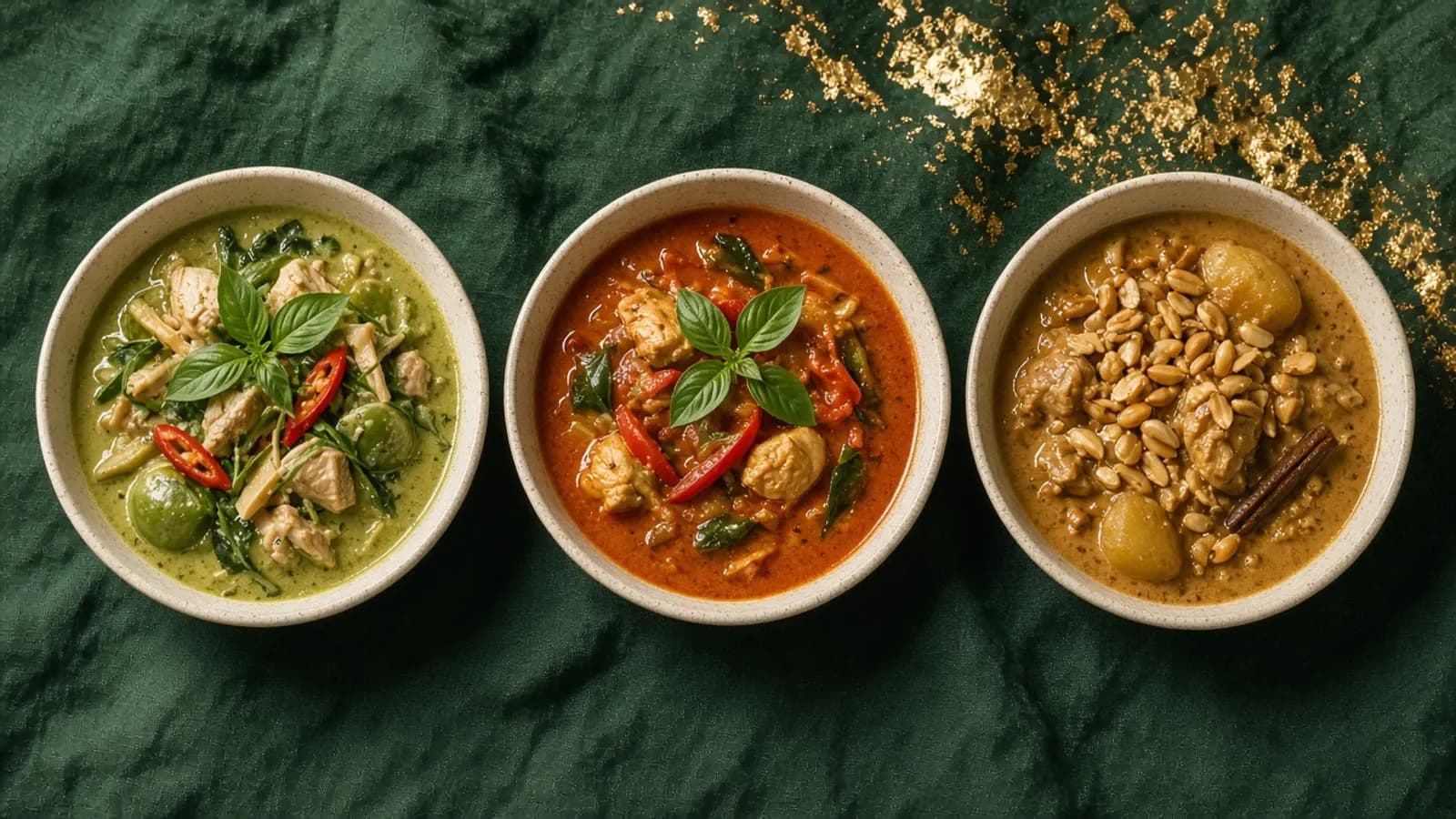
A curry. One. Two if the table is large and the curries are different — green (fresh chilli, basil) and massaman (spice, potato), for example. Three coconut curries is how banquets become beige. Read green versus red versus massaman before you tick boxes on a set menu you cannot parse.
A wok dish. Pad krapow, a chilli-and-garlic stir-fry, noodles if people insist — but noodles plus rice plus two curries is a starch pile. If you want pad Thai on the table, consider dropping the second rice-heavy curry.
Rice. More than you think. Rice is how chilli-shy guests survive a proper salad. Specify jasmine. Sticky rice only if you have ordered dishes that want it.
Sweet. Mango sticky rice in season is a classic. A plate of tropical fruit. Or nothing. Banquets that include a generic fried ice cream are filling a template. You may say no.
Heat must split across this sequence, not arrive as “medium for all”. The salad can be hot. The massaman can be mild. Chilli on the side. The food guide is the language for asking.
Questions to ask the room (not us)
- Do you cook a shared set to order, and can you name the dishes in it?
- Can you replace the second curry with a salad or a basil stir-fry?
- How do you handle vegetarian plates at a mixed table — separate wok, no fish sauce, no shrimp paste?
- Can gluten-free diners avoid soy-thickened sauces?
- What time do you need us seated, and what time is last kitchen?
- Is there indoor seating away from a doorway?
We do not invent the answers. If the room cannot answer, it is the wrong room for a banquet, even if the awning is pretty.
Headcount, pacing and the bill
Under six, you may not need a formal banquet; the default shared shape — sour, curry, wok, rice — will do, ordered from the menu. Six to twelve is where a set, or a pre-agreed list, saves the pass from chaos. Larger than that, you are in event territory: confirm whether the kitchen is still cooking or holding. Docklands tasting notes explain held food; the same tell applies in a private room anywhere.
Pacing: ask that salad and soup not arrive at the same second as every curry. A Melbourne banquet that lands as one crowded table of cooling coconut is a logistics failure. Courses do not need to be French. They need not to be simultaneous.
The bill: ask how it works. One account, split, deposit — those are the room’s policies. We will not quote them. Clarity is a choosing tell, as the CBD reviews page already said about lunch.
If you would rather cook
A home banquet in Melbourne is rice, nam prik ong from the Melbourne recipes, a green curry from the main recipes, a salad, and a krapow. That feeds eight more honestly than twelve half-warm takeaway boxes. Shop in Richmond, Footscray or Springvale. Start rice first. Dress the salad last.
If you want help shaping the set — not booking it — write via contact with the constraints. We will talk dish order. We will not invent availability, a price, or a room that can seat your twenty aunts this Saturday.