This site is an independent Australian guide to Thai food: how to choose a room, how to read a dish, and how to cook a handful of home recipes without pretending a weeknight kitchen is a restaurant brigade. It is not a booking desk, not a live directory, and not a podium. If you arrived here looking for a ranked list of kitchens that are open this evening, you will not find one — and that is a decision, not an omission.
Thai cooking travelled to Australia through family rooms, suburban shopping strips, university catchments and regional high streets. The useful question is rarely “which is the best Thai restaurant in the country”. The useful question is: what is the job of tonight’s meal, and which neighbourhood habits will serve that job? A weekday rice-and-curry lunch in the Hoddle Grid is a different hunt from a slow shared table in Carlton, a windy waterfront night in Docklands, or a goldfields evening in Ballarat. City hubs exist so you can match geography to meal shape without anyone inventing a crown.
City hubs, not a national league table
Start with a city. Melbourne is a city of neighbourhoods: Richmond’s long eating street, Footscray’s market west, Springvale’s south-eastern pantry, the university edge, the Grid, the planned waterfront. Geelong, Bendigo and Ballarat need their own walking maps because a regional pantry, a colder night and a shorter menu change what “good” tastes like. The Gold Coast stretches from Surfers Paradise through Broadbeach and Burleigh into local weeknight streets, and a view is not a broth.
Each hub is a how-to-choose guide. You will find geography, meal shapes, questions to ask about heat and allergens, and the difference between a walk-up and a group table. You will not find a claim that a named operator is currently trading, a score out of ten, or a sponsored shortlist. The honest tool is a method you can take into any room.
When you do sit down, take the tasting notes from the matching reviews page — Melbourne, Melbourne CBD, Carlton, Docklands, Geelong, Ballarat, Bendigo or the Gold Coast. Those pages are notebooks, not restaurant reviews. Broth, herbs, heat, rice and service still have to tell the truth even when the awning is pretty.
Dish literacy before you order
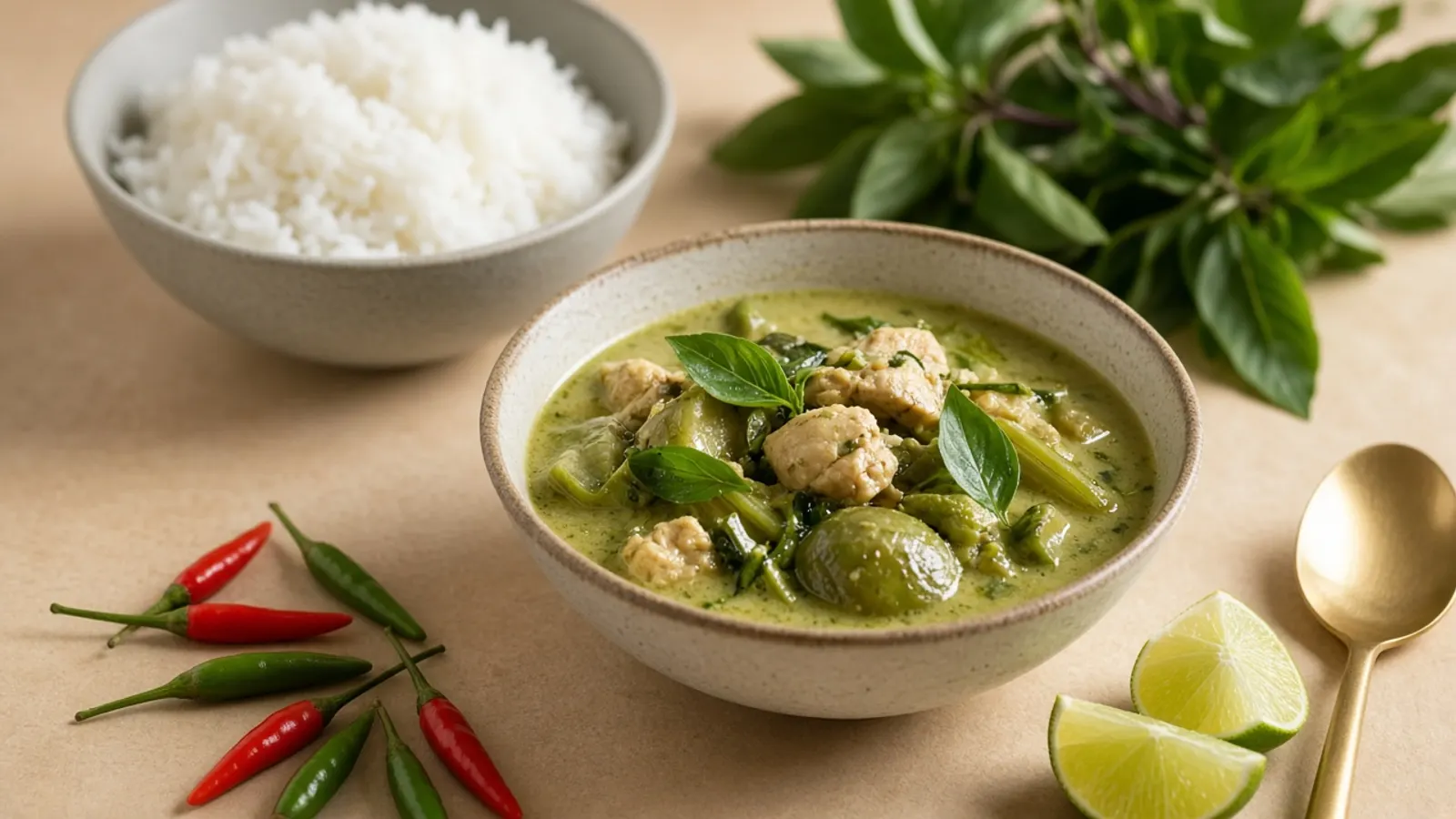
Australian menus often flatten Thai cooking into three curries, a noodle stir-fry and a fried spring roll. That is a starting point, not a cuisine. The dish explainer walks through what belongs in pad Thai, tom yum, som tam, pad krapow and the curries people argue about. Green, red and massaman are not three colours of the same coconut soup. Green is built on fresh chilli and a brighter herb finish. Red is a dried-chilli paste that can travel across meats and vegetables. Massaman is spice-led, usually gentler, and patient with potato and onion.
Heat is not a personality test. Many famous dishes are hot in Thailand and adjustable in Australia. The Thai food guide covers how to order mild without emptying a dish of flavour, and why vegetarian and gluten-free requests are real work rather than a default. Fish sauce, shrimp paste and oyster sauce hide in pastes and woks. Wheat hides in some soy sauces and thickeners. Asking clearly is hospitality, not fussiness.
If you are feeding a group in Melbourne, read the banquet notes before you phone anyone. A shared Thai table has a sequence: something sour, something fried or grilled, a curry, a wok dish, a great deal of jasmine rice, and a sweet only if the table actually wants one. Write dietary needs in a sentence, not as a surprise at the door.
How to choose without a ranking
Walk in with your senses ahead of the laminated photographs. A kitchen that is cooking smells of fried paste, lime leaf, garlic in oil, or a sour soup hitting the boil — not only of sweet chilli sauce and deep-fryer. Herbs on a salad should look like leaves, not a tired garnish parked at dawn. Rice should steam. Staff who can talk about spice in plain language, and who will split heat across a table, are showing you more than a chalkboard special ever will.
Short menus are often a better sign than encyclopaedias. A room that names a few pastes, a salad, a soup and a stir-fry is telling you what it actually cooks. A list that promises every regional speciality on a Tuesday lunch service is telling you something else. None of that requires us to name a venue. It requires you to look.
Independence here means we do not sell a ranking and we do not invent opening hours. The writing is original Australian English, the recipes are written for home kitchens, and the choosing guides stay useful when a particular operator changes hands.
Cook when you would rather stay in
If the night is a home night, start with how to make pad Thai at home, then green curry, tom yum goong and pad krapow. Those four are written for an Australian supermarket-plus-Asian-grocer shop: tamarind, fish sauce, palm sugar, holy basil where you can find it, lime leaves, galangal. City recipe hubs add shopping geography — Melbourne’s inner grocers, a CBD small kitchen, a Carlton sharehouse wok, a Docklands saucepan, a Geelong weekly shop, Ballarat cold-night soup, a Bendigo family pot, and Gold Coast lime and mango. Each city page carries at least one complete recipe that is not copied from its neighbours.
What this guide will not do
We will not invent prices, events, awards, chef quotations or a statistic about how many Thai rooms a city “has”. We will not list specific restaurants as currently operating. We will not rate them. The notes page explains why a gossip feed would be a lie. If you operate a room, use list your venue. If you want us to understand a neighbourhood better, recommend a room with evidence, not a crown. Corrections and practical questions go to contact. The disclaimer and about pages state the same independence in slower language.
Choose the city, learn the dish, ask about heat, and taste the broth. That is the whole job of the site. The rest is hospitality you practise at the table.