Docklands is a planned waterfront precinct. That sentence should change how you choose a Thai meal. Wind moves differently here. Crowds pulse when a stadium or arena lets out. Hotel guests arrive with luggage and a need for indoor seating. Visitors treat the promenade as the destination. None of that is a reason to eat badly, and none of it is a reason for us to invent a shortlist of operators who are open on the night you happen to visit.
Choose Docklands when Docklands is the meeting-point: someone is staying in a waterfront hotel, a group is already on NewQuay, or the walk back to a train is shorter than a pilgrimage to Richmond. If you have a free evening and no precinct constraint, read the Melbourne hub and go where the grocers are. If you are here, use this method.
NewQuay, harbour edge and the wind
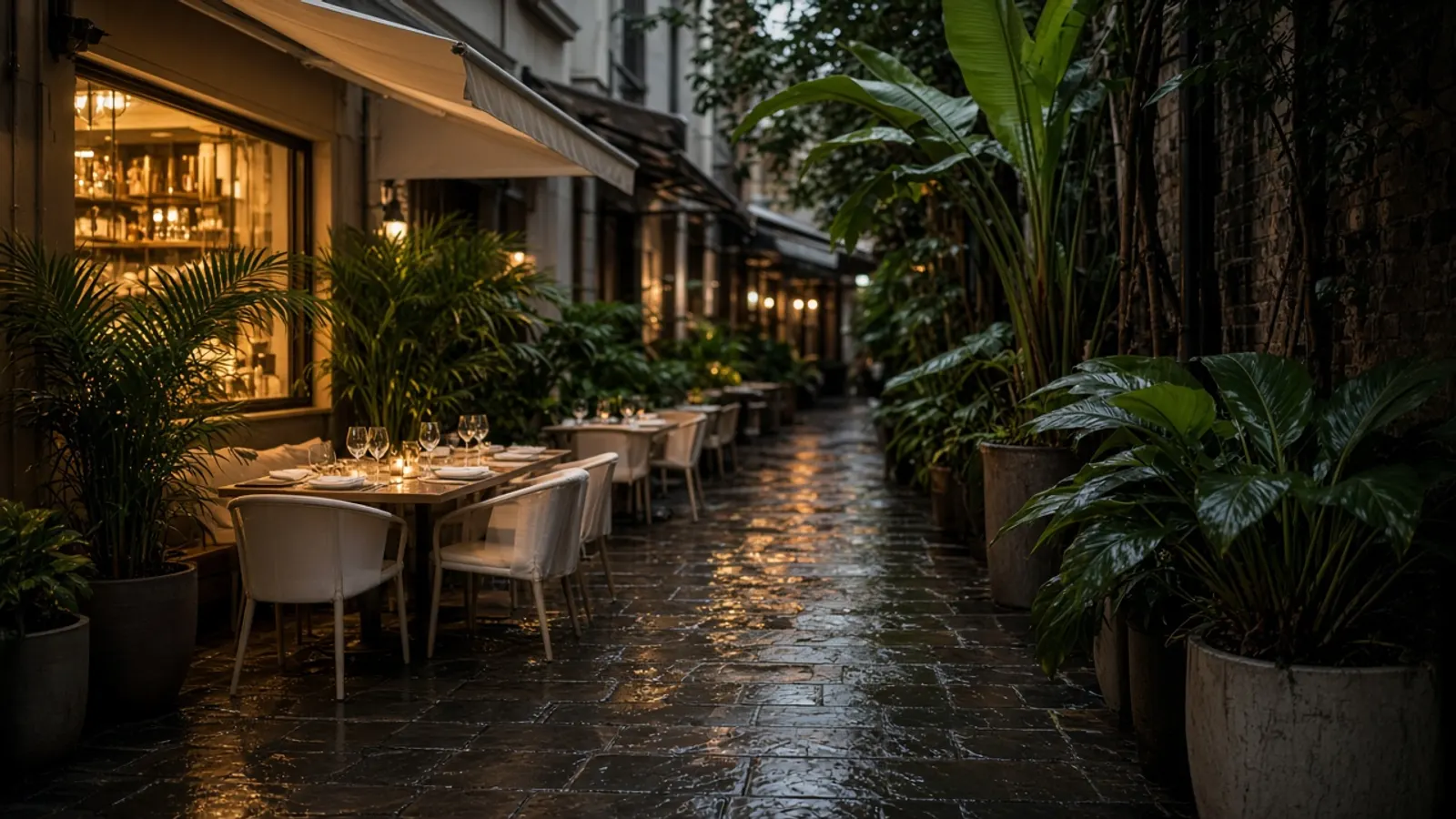
NewQuay and the harbour-edge promenades are beautiful and exposed. Ask about seating before you commit to a “waterfront table”. A Thai meal that depends on herbs, a clear soup and a dressing of lime and fish sauce does not improve when napkins become sails. Indoor rooms, glass that actually stops the southerly, and a table that is not in a door draught are practical questions, not fussiness.
Wheelchair access, lifts from the station, and the long distances between apparent neighbours all matter more in Docklands than in Carlton terraces. Look at the walk on a map. Precincts that were designed in stages can put a five-minute walk across wind and works. If someone in your group has limited mobility, ask the room how to arrive, not only how to eat.
The Grid is adjacent. Sometimes the honest choosing move is to walk inland for shelter and a denser choice of menus, then walk back for the view. That is allowed. A view is not a broth.
Event nights are a kitchen test
When a stadium or arena night fills the precinct, kitchens face a choice: cook to order, or hold. You cannot see the pass from the promenade. You can still order dishes that reveal holding — a salad that should be dressed at the last minute, a basil stir-fry that should hit a hot wok, a soup that should smell of lime leaf rather than of a bain-marie. If those land tired, you have your answer, and you can eat rice and go. The Docklands tasting notes are written for this exact pressure.
Arrive earlier than the crowd if you can. Write the headcount. Ask whether a shared set is actually cooked when you sit down. We will not invent event calendars or last-order times; you should check both with the room and with whatever you are attending next door.
Hotel guests should say they are guests — again, not for a tourist menu, but for last kitchen times, indoor seating, and a bill that does not require you to hunt a counter. Compact rooms inside hotels vary wildly. Judge them with the same salad-and-soup test you would use on NewQuay.
What to order when the precinct is the point
Keep the order short and structural. Something sour (tom yum, a yum salad, green papaya if they have it), something from a wok, a curry only if you have time to sit, and rice. Docklands groups often over-order fried parcels because they photograph against the water. Fried parcels are not a sin; they are a poor sole test of a Thai kitchen.
Heat still splits across a table. Visitors mixed with locals mixed with children is a Docklands default. Mild is a fair request. So is extra lime. Humidity is lower than the Gold Coast, but the wind will cool a soup faster than a Richmond dining room will — eat soup while it is soup.
Dietary notes: same rules as the rest of Melbourne. Fish sauce, shrimp paste, peanut, gluten in soy. Precinct service can be stretched on event nights; a written note helps.
Cook in the apartment instead
Many Docklands stays are apartments with a compact kitchen and a view you actually want to keep. The Docklands recipes assume you shop once — herbs, lime, fish sauce, a protein — and cook a saucepan soup plus a frypan stir-fry. You do not need a wok. You do need to start the rice first.
If you are planning a larger shared table anywhere in Melbourne, including a waterfront room, use the banquet page. Docklands can host a banquet. It simply hosts it with weather and a crowd pulse, and those belong in the plan rather than as a surprise when the siren sounds.
Hotel kitchens and apartment kitchens sit on the same precinct map. A guest who eats out on Friday and cooks a saucepan soup on Saturday is using Docklands correctly. Do not treat the promenade as the only Thai geography in the west of the Grid; the Melbourne hub still exists a tram ride inland when the wind makes every outdoor table a bad tasting room.