Docklands can cook. Docklands can also hold food for a stadium rush and hope the view does the rest. This tasting method exists so you can tell the difference. It is not a review of precinct operators, and it will not recommend a balcony.
Use the Docklands hub for wind, walking and groups. Use this page when the lid comes off the plate.
Event nights: held food versus cooked
On a night when the precinct fills, order the dishes that cannot hide in a bain-marie. A basil stir-fry should arrive smelling of the wok, garlic and leaf. A salad should still crunch. Satay that has been sitting will tell you with dry peanut sauce and meat that has pulled tight.
Soup is informative and risky. A tom yum finished to order will still perfume the table with lime leaf. A held soup will taste of salt, chilli and fatigue. If the room only wants to sell a set banquet of unnamed trays, ask for the dish names. Mystery is not hospitality. The Melbourne banquet logic still applies: sour, fried, curry, wok, rice — each item identifiable.
Arrive earlier if you can. Tasting a kitchen before the siren is a different meal from tasting it in the scramble, and both are valid data. We will not invent the event timetable; you already know if you are attending one.
Seat: indoor when the wind lifts
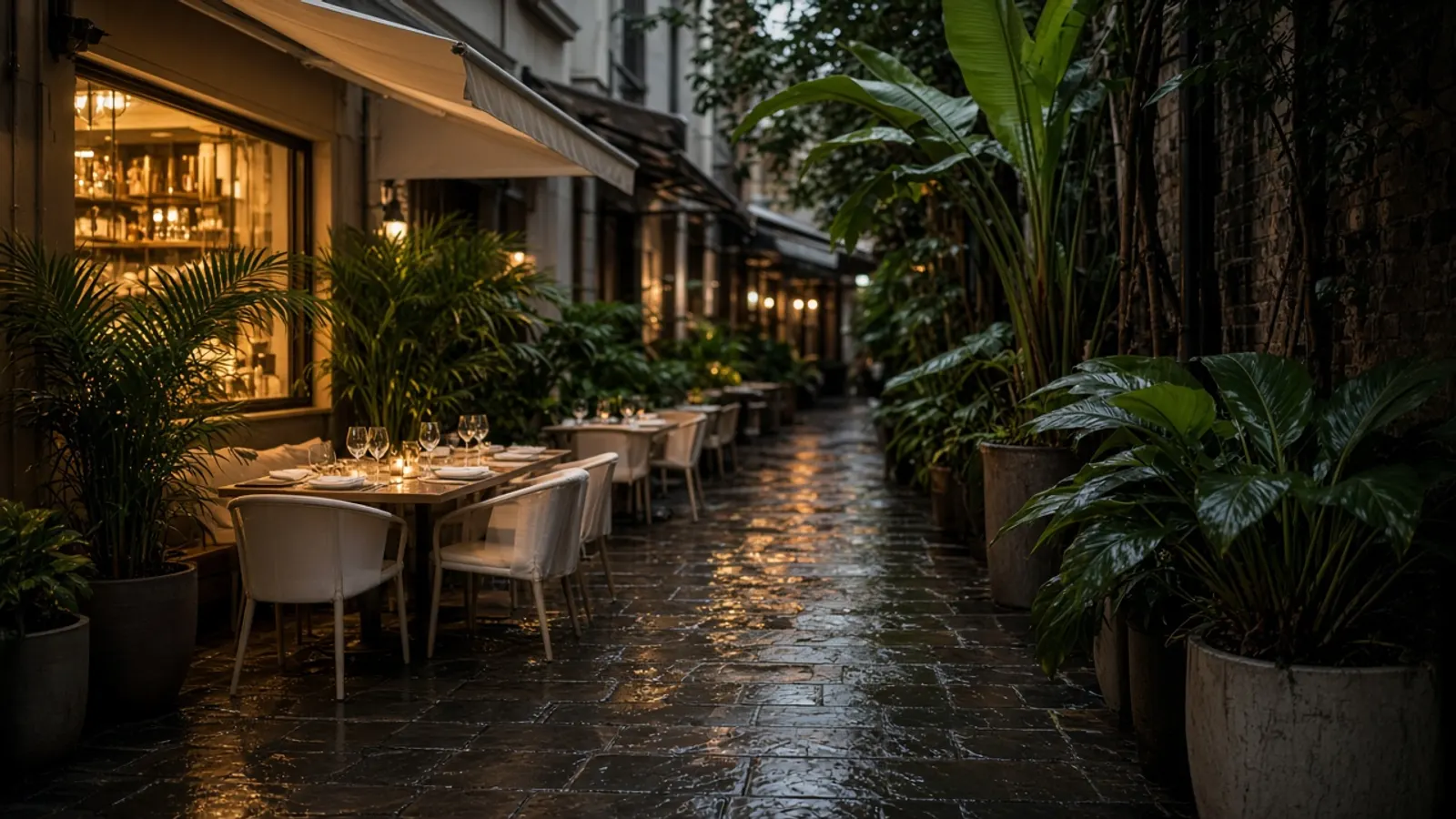
A waterfront table is a romantic idea and a terrible place to judge herbs. Wind cools soup, flings napkins, and makes chilli feel sharper because your nose is busy with salt air. Sit inside if you actually want to taste. Ask before you book or before you queue. Wheelchair routes and lifts are part of this question in a precinct with decks and promenades.
Hotel rooms inside hotels deserve the same salad test as NewQuay frontage. Compact hotel kitchens can be excellent and can also send out a generic coconut. Judge the dressing.
Set menus: named dishes, not mystery
Precinct groups get offered sets. A set is fine when it names tom yum, green curry, pad krapow, rice — the actual dishes. A set that only says “banquet A” is asking you not to taste with your mind switched on. Rename the dishes yourself using the explainer and notice what is missing (usually the salad).
Heat on a set should still split. Visitors plus locals plus children is a Docklands default. Chilli on the side is not a compromise of authenticity; it is how mixed tables eat.
Access and the bill
Ask how to arrive. Precinct wayfinding fails people. A tasting method that ignores a twenty-minute walk in the wind is a method for the able and the unencumbered only. Service that can explain the walk, the lift, and the bill is part of the kitchen’s truth even though it is not on the plate.
Rice should still steam. Jasmine that sits on a pass in a draught dries at the edges. Notice.
If you would rather not wrestle the precinct, cook the Docklands apartment recipes and look at the water from a window that closes. The tasting notes still apply: your own soup should be sour and hot, your own stir-fry should hit a hot pan, and the view should remain a view.
Wind, temperature and a soup that cools
Docklands air steals heat from a bowl faster than a Richmond dining room. That is not the kitchen’s fault if the soup arrived boiling. It is the kitchen’s fault if it arrived tepid. Taste in the first two minutes. A waterfront table in a draught will always flatten herbs and sharpen chilli in the nose; move inside before you write the soup off. Geography is a tasting variable here in a way it is not in Carlton.
Hotel-guest tasting: last kitchen, indoor seats, a bill you can read without hunting a counter. None of those are flavours. All of them decide whether you get to taste. A compact hotel kitchen can send an excellent krapow and a generic coconut on the same tray. Trust the wok smell more than the printed “Thai banquet”.
Event-night groups over-order fried parcels because they photograph against water. Taste one parcel if you must, then go back to salad and wok. A banquet of unnamed trays is the failure mode the Melbourne banquet page already warned you about. Rename the dishes. If you cannot rename them, you are not tasting Thai cooking; you are tasting a catering pattern.
Service stretched by a stadium crowd will still have a voice. A sentence about chilli is enough. A shrug is a tell. You may eat rice and leave without owing the precinct a full tasting. Incomplete notes are honest notes.
Rice in a draught dries at the edges. Ask for a fresh bowl if the first one sat. That request is reasonable on NewQuay. It would be odd in a closed Footscray room. Place matters.