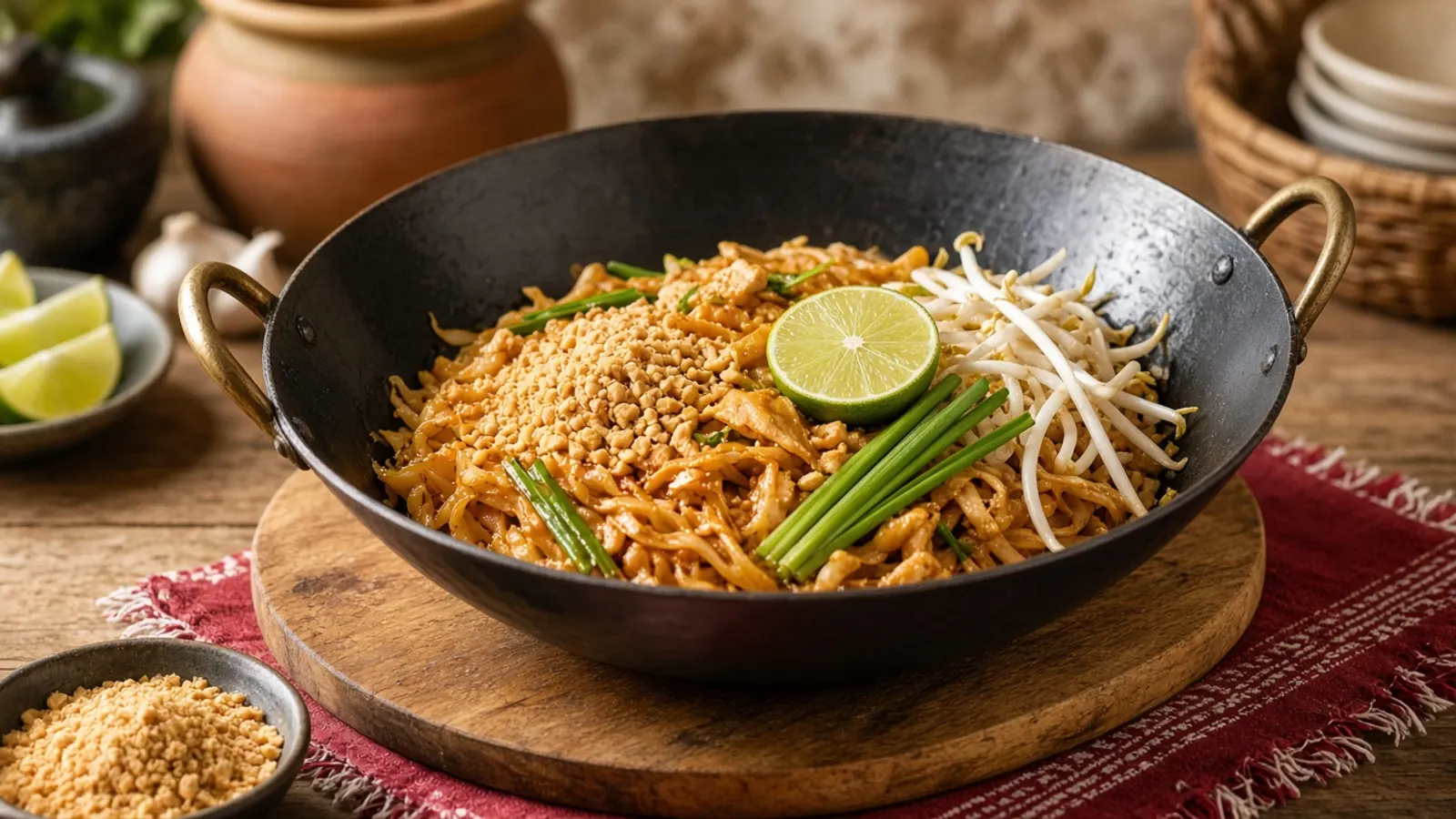
Melbourne is the easiest Australian city in which to shop for Thai cooking and the easiest in which to overcomplicate it. You can buy holy basil, makrut lime leaves, galangal, green papaya and shrimp paste on a single inner-city loop — Richmond’s long grocery street, Footscray’s market west, Springvale’s south-eastern belt — and you can still come home and cook a brown stir-fry. These recipes assume you will spend the extra ten minutes on the herb bunch and the extra two minutes frying a paste.
Nothing here recreates a named restaurant plate. For pad Thai, green curry, tom yum goong and pad krapow in full, use the main recipes page. This page adds Melbourne shopping notes and one complete unique recipe: a northern-style tomato and pork relish (nam prik ong) with sticky rice and crudités. It is a shared table you can build after a grocer run, and it does not appear on the other city hubs.
How to shop in this city
If you live inner-east or inner-south, Richmond is a practical herb stop even when you are not eating on that street. Look for bunches of Thai basil and holy basil (they are not the same), limes that feel heavy, and lime leaves that are glossy rather than olive-drab. Footscray is the trip when you want green papaya, Thai eggplants, morning glory and a better chance of fresh galangal. Springvale is the trip when you are filling a freezer: shrimp paste, tinned bamboo, palm sugar discs, rice sticks, sticky rice, good fish sauce.
You do not need all three neighbourhoods in one week. You need a rhythm: fish sauce and rice on the supermarket shelf if that is what you have, herbs on the day you cook, paste ingredients when you pass a specialist. Freeze lime leaves and galangal in small bags. Holy basil does not freeze kindly; buy it for krapow night.
Weeknight cooking in Melbourne should start with rice. A rice cooker on the bench is not a gadget here; it is how you make the salad allowable. Read the Melbourne tasting notes and cook toward them: sour, herbal, heat you control, rice that steams.
Nam prik ong — tomato and pork relish with sticky rice
This is a northern Thai relish of pork mince, tomato and a dried-chilli paste, eaten with sticky rice and raw vegetables. It is salty, a little sweet from tomato, and warm rather than coconut-rich. It feeds four as part of a shared table, or two greedy people who have also steamed rice.
Ingredients
- 200g glutinous (sticky) rice, soaked in cold water for at least 4 hours or overnight
- 3 dried long red chillies, soaked in warm water until soft, seeds shaken out if you want milder heat
- 4 garlic cloves
- 3 Asian shallots, chopped
- 1 teaspoon shrimp paste
- 2 tablespoons neutral oil
- 250g pork mince
- 3 ripe tomatoes, roughly chopped (or a 400g tin of chopped tomato, drained a little)
- 1 tablespoon fish sauce
- 1 teaspoon palm sugar
- A handful of chopped spring onion and coriander to finish
- Cucumber sticks, cabbage wedges, long beans or carrot batons, to serve
Method
Drain the sticky rice. Steam it in a bamboo steamer lined with muslin (or in a metal steamer lined with baking paper poked with holes) over boiling water for 20–25 minutes until the grains are tender and pearly. Keep it covered so it does not dry.
While it steams, pound the soaked chillies, garlic, shallots and shrimp paste in a mortar to a coarse paste — or pulse in short bursts in a small processor, stopping before it becomes a smoothie. Heat the oil in a wok or heavy frypan over medium heat and fry the paste until it smells toasty and the oil reddens, a few minutes. Add the pork mince and break it up until it is cooked and a little browned. Add the tomato, fish sauce and palm sugar. Cook until the tomato collapses into the pork and the mixture is saucy but not watery, 8–12 minutes. Taste: it should be salty first, then a little sweet, with a warm chilli heat. Finish with spring onion and coriander.
Serve the relish in a bowl with the sticky rice and the raw vegetables. People take a lump of rice, a cucumber stick, a spoon of pork. It is a hands-and-herbs meal, which is a very Melbourne Tuesday if you shopped on the way home from Richmond.
Notes
If you cannot find sticky rice, jasmine rice will carry the relish, but the pairing is different — more a rice-bowl supper than a northern snack. If you cannot find shrimp paste, the relish will still work; add a little extra fish sauce and know it has lost a layer. Vegetarian versions can use crumbled firm tofu and a mushroom soy, but then you are in a different dish; be honest about that.
Leftover relish keeps in the fridge for a day and is excellent on jasmine rice with a fried egg, which is not traditional and is still a good breakfast.
What else to cook from the Melbourne pantry
After a Footscray or Springvale shop you are close to the four recipes on the main page: pad Thai if you bought rice sticks and tamarind; green curry if you bought basil and a coconut tin; tom yum if you bought galangal and lime leaves; krapow if you found holy basil. Do not cook all four. Cook rice, one relish or salad, and one wok dish.
For a group, the banquet page will stop you from serving three coconut curries. For neighbourhood choosing rather than cooking, return to the Melbourne hub. And if you are in a studio in the Grid with one pan, the CBD recipes are the impatient cousin of this page.