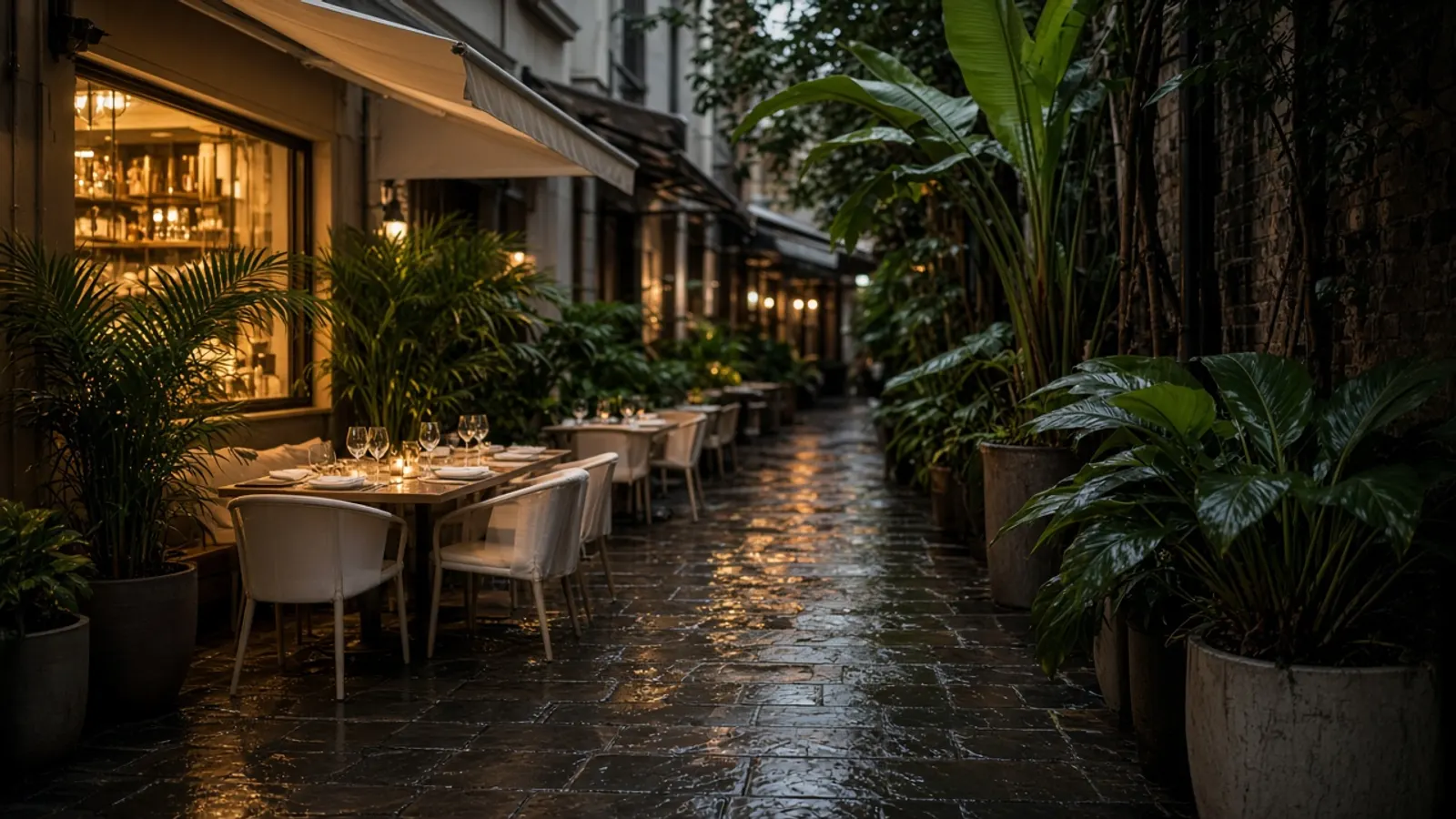
This page is a tasting notebook for Melbourne, not a review of named restaurants. The useful part of judging a meal was never the score. It is the method: did the broth taste of something, were the herbs alive, could you ask about heat, did the rice steam, and did service hear the table? Take these questions to Richmond, Footscray, Springvale, Carlton, the Grid or anywhere the Melbourne hub sent you.
You do not need our permission to like a room. You need a way to notice when a kitchen is cooking.
Broth
Order a soup if the menu has a real one. Tom yum should be hot through the bowl, sour before it is sweet, and aromatic with lime leaf, galangal and lemongrass — a clear or cloudy-sour broth, not a fluorescent slick. Tom kha should taste of galangal and coconut, with lime and fish sauce keeping it from becoming dessert. A soup that could be any cuisine’s coconut is a fail of identity, not of “fusion”.
Holding is the Melbourne weekday risk. A soup that has sat will lose the top notes of lime and taste only of salt and chilli. You cannot see the stockpot. You can taste whether someone finished the bowl with fish sauce and lime at the pass. If you are testing a kitchen and may only order two dishes, let soup be one of them.
Noodle soups are a different family. They should still smell of their paste or broth, not of a generic meatiness. Judge the noodles separately: they should not be swollen from waiting.
Herbs
Melbourne can buy excellent herbs. There is therefore little excuse for garnish that looks like it travelled yesterday. Thai basil should perfume the plate when it is stirred through a curry. Holy basil in a krapow should be a flavour, not three leftover leaves. Mint and sawtooth coriander in a salad should taste green.
Look at som tam, larb and yum dishes first when they arrive. Dressed to order, the vegetables still have crunch and the herbs still have a face. Dressed at noon, everything weeps. Inner-city rooms sometimes hide tired herbs under crushed peanut. Peanut is not a disguise that works.
If you cook at home from the Melbourne recipes, you already know how fast holy basil blacks in a hot wok and how sad lime leaves look when they dry out. Apply that knowledge in public.
Heat
Heat in Melbourne Thai cooking is adjustable more often than visitors from a chilli-shy household expect, and less automatic than travellers from Bangkok expect. Ask. “Mild” should mean fewer chillies, not more sugar. “Medium” should still taste of the dish. “Hot” should not be a dare that wrecks the sour-salt balance.
A table of four in Melbourne is often four heat levels. The civilised pattern is split dishes, chilli on the side, and a staff member who does not roll their eyes. If heat is only available as one setting, order structurally gentle dishes (massaman, many yellow curries, satay) and structurally hot ones (som tam, larb, tom yum) rather than arguing with a single green curry.
The food guide is the longer asking script. This page is the tasting script: after you asked, did the mild dish still taste of paste and herb, or did it taste of coconut milk from a carton and nothing else?
Rice
Jasmine rice should steam, smell faintly floral, and separate. Clumped, fridge-cold, or yellowed rice is a hospitality failure that no curry can carry. Sticky rice belongs with certain northern and north-eastern dishes; if you ordered larb or nam prik-style relishes, notice whether the kitchen understands that pairing or only sends jasmine by default. Default jasmine is fine. Confused rice is information.
Quantity matters on a shared Melbourne table. Rice is the reason the salad can be properly hot. If the kitchen is mean with rice, the table will over-order protein and the balance of the meal will collapse. You may ask for more. That is not a scandal.
Service
Service is part of the tasting because Thai food is a conversation about chilli, fish sauce, peanut and time. Can they hear a dietary note in a loud room? Will they split the bill without theatre? Do they know whether the curry paste contains shrimp? Melbourne service ranges from familial to brisk. Brisk is allowed. Unhearing is not.
A walk-up welcome without a rush is a Carlton-and-inner-north virtue; a timed lunch is a Grid virtue; a translated menu is not automatically a tourist trap. Listen for whether the person taking the order can name a dish without pointing at the photograph.
Take this notebook, not a ranking. If you want to cook the same flavours, the recipes page is waiting. If you want to plan a group, use the banquet notes. The meal still has to taste of itself.